




The Science of Aso Oke: Kente’s Quieter Cousin
When people speak of iconic African textiles, Kente is often the first to be praised, bold, geometric, and unapologetically regal. But beneath that shout lies a whisper just as powerful: Aso Oke.
Aso Oke (pronounced ah-SHAW-okay), Yoruba for “top cloth,” is a handwoven textile with roots in Southwestern Nigeria. It has clothed royalty, honored the deceased, marked unions, and lined the halls of celebrations for centuries. If Kente is a drum, Aso Oke is a talking drum. Subtle, elegant, deeply coded.
But what makes it special isn’t just the way it looks, it’s how it’s made, who wears it, and what it means.
Woven with Intention
Each strip of Aso Oke is made on a narrow loom, typically about four to six inches wide. The weaver, almost hypnotic in rhythm, passes the shuttle back and forth hundreds of times. This isn’t just fabric, it’s architecture. The warp and weft form the very foundation of culture.
The colors aren’t accidental either. In Yoruba cosmology, color carries weight:
- Red (pupa) often signifies spiritual power or intense emotion.
- White (funfun) symbolizes purity and connection to the orisha Obatala.
- Blue (dúdú) evokes depth and mystery.
- Green and gold are signs of prosperity, health, or royalty.
 Aso Oke production process. Photo via bellafricana.com
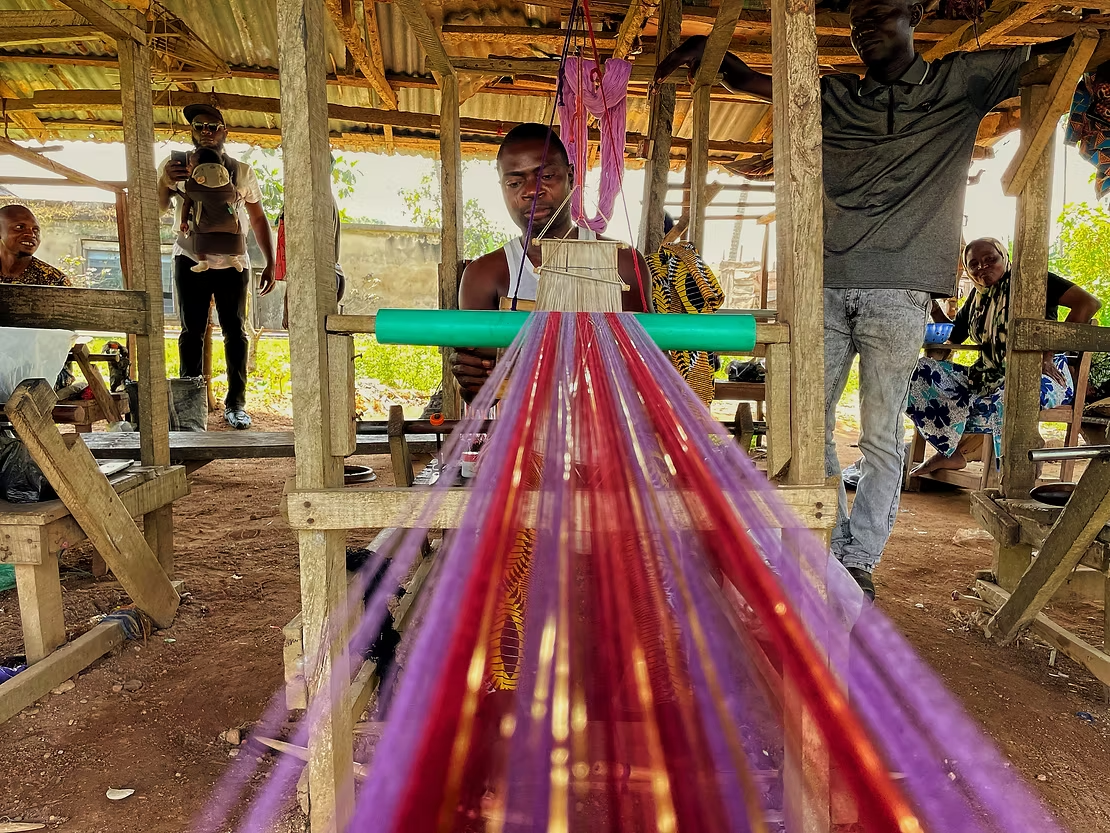 Aso Oke weaving in Iseyin, Oyo State. Photo via foluoyefeso.com
The weaving process itself is often a family trade passed down through generations. Towns (like Iseyin in Oyo, Nigeria) are historically known as weaving hubs, with skills cultivated from childhood. Some families have been weaving Aso Oke for over 100 years.
To this day, many families still invest in a handwoven Aso Oke set for important life events like weddings, burials, or naming ceremonies. It’s a physical heirloom, something not just worn but remembered.
Kente vs. Aso Oke: Aesthetic Diplomacy
The comparison to Kente is almost inevitable. And to be fair, Kente is captivating, it demands attention. But Aso Oke? Aso Oke seduces.
Where Kente patterns are often symbolic and representative of proverbs, Aso Oke is more abstract, whispering meanings through texture, shine, and layering. It can be matte or metallic, smooth or slubby. Some varieties like the lace infused Etu, or the shimmering Sanyan, spun from wild silk feel like secrets against your skin.
It’s Kente’s quieter cousin, yes. But also its older one. Aso Oke dates back at least to the 15th century, perhaps earlier. In that sense, it isn’t a cousin, it’s an elder. And it carries itself like one.


Aso Oke and the Cycle of Life
In Yoruba culture, there’s a saying: “Aso l’ebi,” meaning “cloth is the family.”
On your wedding day, your family wears it in solidarity. At your naming ceremony, it swaddles you. In death, it shrouds you. To be Yoruba is to be clothed in Aso Oke from birth to burial.
Even the styles carry meaning. A head tie (gele) tied high might speak of status or celebration. An agbada robe with deep embroidery? Often reserved for men of influence or ceremony. And in modern times, Aso Oke has adapted into jackets, handbags, and even sneakers, incorporating tradition into trend.


The Economics of Elegance
Aso Oke is no longer a village craft, it’s an industry. While handweaving still exists, machine assisted methods are becoming popular due to cost and time. This has led to tensions between traditionalists and pragmatists. Some purists believe machine woven pieces lose the spirit of the cloth; others argue accessibility matters.
Still, demand continues. Designers like Lisa Folawiyo, NKWO, and IAMISIGO have experimented with Aso Oke in contemporary designs. And the fabric has walked runways from Lagos to Paris.
Yet, most weavers live modestly. There’s a growing movement to empower them through better representation, fair pricing, and skill sharing. Brands like Ethnik by Tunde Owolabi, are among those uplifting textile artisans and ensuring the story doesn’t end at the market stall.


Spiritual Fabric
There’s something undeniably spiritual about Aso Oke. It is used in orisha initiations, chieftaincy rites, and ancestral festivals. Some pieces are considered sacred, worn only during rites or blessings. When worn, they carry not just memory, but energy.
Many elders speak of Aso Oke as though it is alive. And maybe it is. The meticulous weaving, the hours spent, the prayers whispered into the yarn. Maybe, just maybe, it’s more intentional than we think.

A Living Textile
What’s magical is how Aso Oke continues to evolve. Young Nigerians, home and abroad, are reclaiming it in inventive ways, wrapping it as crop tops, sewing it into joggers, even framing it as wall art.
Instagram pages like @asookepalace chronicle this revival, blending past and present. They show that the fabric isn’t stuck in time, it moves with us.
We’re also seeing a push toward sustainability. Natural dyes, ethical production, and slow fashion are becoming part of the Aso Oke conversation. It’s no longer just heritage, it’s a design philosophy.


In conclusion, aso oke isn’t just cloth. It’s story. It’s survival. It’s style.
So next time you see someone in shimmering Aso Oke, don’t just compliment the outfit. Understand the hours behind it. The generations. The subtle choices of thread and tint. The cultural codes and spiritual syntax.
Aso Oke is not loud. It doesn’t need to be.
It simply stands. Regal, intricate, and woven with memory.


Pingback: Beyond the Dye: How Adire Is Powering a Cultural and Commercial Renaissance - FashionEVO