




Apprenticeships vs. Fashion Schools: Shaping Africa’s Designers
Two Paths, One Goal
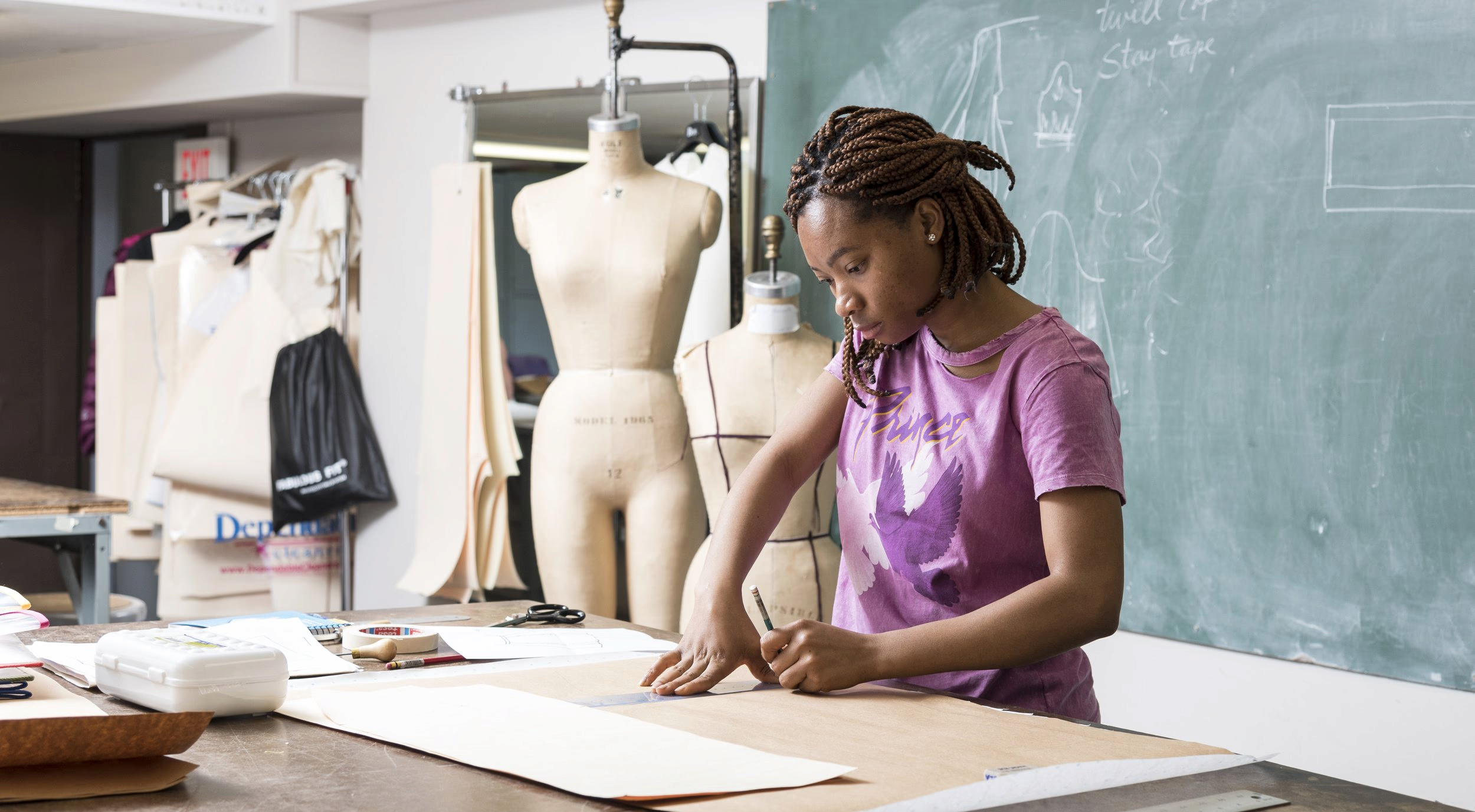
When people think of fashion education, the first image is often classrooms, sewing labs, and structured curricula. But across much of Africa, the story of how designers learn their craft has long been anchored in a different model: the informal apprenticeship. For decades, before academies like GMYT or YabaTech’s fashion program gained recognition, learning the trade meant sitting at the feet of a master tailor or seamstress. That system still thrives today, running parallel to the rise of formal schools. The comparison between both models says a lot about where the industry is heading, and what gaps still exist.
Why Apprenticeships Endure
Apprenticeships remain the most accessible pathway for many aspiring designers. They demand no entry exams or certificates, only a willingness to commit years to sweeping floors, threading needles, and slowly working up to cutting and sewing. In Nigeria, apprenticeships under “oga” or “madam” tailors are widespread. The model has produced countless skilled designers who might never have afforded tuition at a formal institution. It’s also deeply rooted in community: an apprentice isn’t just learning stitches, they’re learning the rhythm of running a shop, managing customers, and hustling in real market conditions. For some, that survivalist training is what keeps them competitive.
A strong example of this is Adebayo Oke-Lawal of Orange Culture, who has often credited mentorship and informal learning with sharpening his perspective, even as his brand now sits on international platforms. Stories like his show the power of apprenticeships to nurture creative resilience.

The Case for Fashion Schools
Formal academies, however, have introduced a different kind of rigor. At Yaba College of Technology, where Ejiro Amos-Tafiri graduated top of her class, fashion education is grounded in technical drawing, textile science, and structured design principles. GMYT Fashion Academy, under Princess Kelechi Oghene, builds entrepreneurship into its model, equipping graduates with machines and running professional runway shows to launch careers. These are things an informal workshop might never provide.
These schools give students the benefit of industry linkages and international exposure. Opportunities often beyond the reach of informal training. As explored in our feature on Nigeria’s growing fashion education scene, many of these institutions are steadily transforming the pipeline for new talent.


Strengths and Shortcomings
Still, the apprenticeship system has its unique strengths. Tailors trained informally often develop remarkable adaptability. Working with limited tools, they learn to improvise in ways that fashion school graduates sometimes struggle with. They also inherit hyper local knowledge about fabrics, body types, and customer preferences (knowledge that can’t always be taught in a classroom). Designers like Folake Folarin-Coker of Tiffany Amber have spoken in interviews about learning the business from both sides: mentorship under established creatives and later exposure to global fashion systems. The blend often produces the most resilient professionals.
But apprenticeships face major criticisms too. They can be exploitative, with apprentices spending years doing unpaid menial tasks before gaining meaningful skills. The lack of standardization also means quality varies widely: one apprentice might become an excellent cutter, while another emerges with little more than basic hemming knowledge. In contrast, formal schools at least promise a set curriculum and accreditation that can open doors to grants, competitions, and cross border opportunities.

Finding the Balance
The reality is that the two systems are not enemies but complements. Many designers in Africa start with apprenticeships and later seek formal training to refine their craft. Others attend school first and then apprentice to gain real world grit. Both models reveal the dual identity of African fashion: one rooted in heritage, community, and resourcefulness, the other reaching toward global standards and structured growth.
As the FashionEVO Student Designer Competition highlights this year, education (whether in workshops or schools) is the foundation of tomorrow’s talent. What matters most is not the path chosen, but how these pathways can work together to build a stronger, more innovative industry. Remember to sign up here to attend the FashionEVO Summit and Show at Africa Creative Market 2025


